Author: Martina

  • The Smart Construction Site: A New Paradigm for the Construction Industry

    The Smart Construction Site: A New Paradigm for the Construction Industry

    A construction site is often a hub of frenetic and complex activity, where worker safety is an undisputed priority. From this perspective, the “complex construction site” model represents a revolutionary innovation, designed to create a management system that actively promotes practices aimed at ensuring workplace safety by leveraging the voluntary use of advanced protocols.

    The Human Factor and Workplace Safety on Complex Construction Sites: Let’s Take an In-Depth Look

    Research on the causes of workplace accidents has shown that the human factor is the primary contributor to injuries. It is clear that procedural errors—often resulting from inadequate worker education and training—are the leading cause of workplace accidents. This underscores the crucial importance of addressing human dynamics in the management of construction sites.

    Specifically, the complex construction site model is based on a management approach that goes beyond compliance with mandatory regulations, encouraging the voluntary adoption of advanced safety practices. Encouraging workers to actively participate in initiatives that promote accident prevention becomes a central element, making each worker not only a performer but also a champion of their own safety.

    Personalized Education and Training: A Tailored Approach

    To reduce procedural errors, the model places particular emphasis onworker education andtraining. A personalized approach, taking into account specific skills and individual needs, is essential to ensuring that every team member is adequately prepared to tackle the challenges of the construction site safely and efficiently.

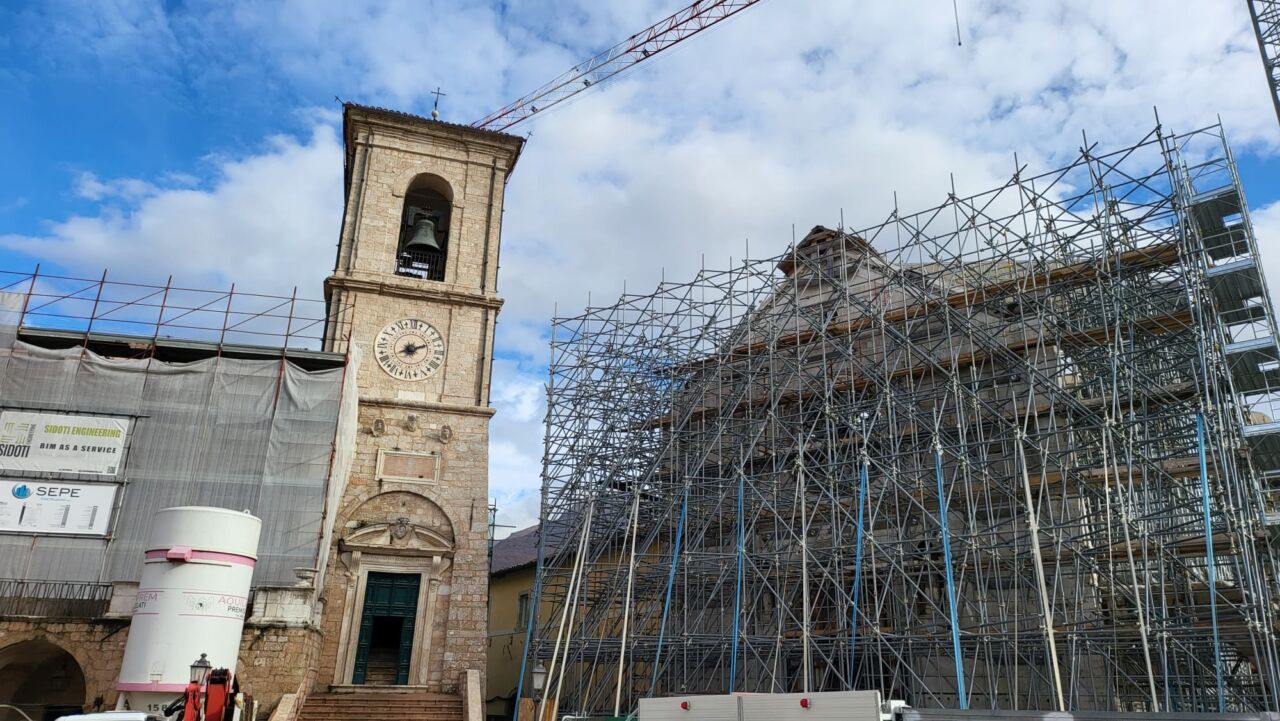
    Construction Site of the Basilica of St. Benedict in Norcia

    In addition to training, the use of innovative technologies such as drones, advanced sensors, and virtual reality makes it possible to monitor and improve safety on construction sites. These solutions provide a real-time overview of conditions, identifying potential risks and guiding preventive actions. The digital revolution on construction sites not only optimizes operations but also protects the workforce.

    Collaboration Among Stakeholders: A United Front for Safety

    A crucial aspect of a complex construction site is fostering close collaboration among all project stakeholders. Open and transparent communication among contractors, designers, supervisors, and workers is essential for promptly identifying and resolving any safety-related issues. Sharing responsibility is key to creating a safe and productive work environment.

    Ruins in Norcia After the Earthquake

    A concrete example of the successful application of the complex construction site model emerged during the renovation of the Basilica of St. Benedict in Norcia. The implementation of advanced practices and voluntary management not only ensured worker safety but also contributed to the restoration of a precious cultural heritage site. If you’d like to learn more, we’ve covered it here.

    The Complex Construction Site: A Holistic Approach to Workplace Safety

    In summary, the complex construction site model offers a holistic approach to workplace safety, pushing the boundaries of traditional management practices. Investing in worker safety not only saves lives but also helps improve the efficiency of the construction site as a whole. Adopting this model is not only an ethical obligation but also an investment in the future of the construction industry, promoting a healthy and sustainable work environment.

    If you want to successfully implement this important aspect in your company, here you can find all the information you need.


  • Digital Work: 11 Health Recommendations

    Digital Work: 11 Health Recommendations

    In Europe, the rapidly evolving landscape of digital work is evident in the more than 500 active digital work platforms in 2021. European Commission projections indicate that more than 28 million people are actively engaged in digital work, with that number expected to rise to 43 million by 2025. However, despite this growth, the European Trade Union Institute estimates that only 3 million can be classified as “primary platform workers, ” highlighting the complexity and diversity of involvement in this sector.

    Digital Work: How Can We Ensure a Safe and Healthy Work Environment?

    This article, which focuses on occupational safety and health, explores the evolving nature of digital work, concentrating on an analysis of the contractual classification of workers considered to be self-employed or freelancers. Using a mixed-methods research approach, the study examines the working conditions and occupational risks specific to digital platforms, with a particular focus on on-site activities beyond traditional delivery and ride-sharing services.

    Drawing on previous research on occupational health and safety issues,this article—preparedby the European Agency for Safety and Health at Work (EU-OSHA)—provides clarity on regulations, policies, and initiatives, with the aim of guiding the decisions of policymakers, employers, and workers in the digital sector. In this dynamic context, a focus on occupational safety and health (OSH) plays a crucial role.

    The 11 EU-OSHA Recommendations

    The following recommendations, formulated with the aim of raising health and safety standards in digital work, summarize the guidelines for ensuring a safe and healthy work environment:

    • Improving Access to Secure Communication Channels

    The lack of complaint resolution systems and communication mechanisms for platform workers represents a significant shortcoming. It is recommended that an organizational mechanism be established to allow workers to express, voice, and monitor their concerns regarding job security. This could be achieved through complaint management systems, help desks, or hotlines (automated support systems).

    • Extending OSH considerations to business transactions

    Platforms should incorporate considerations regarding occupational safety and health into corporate financial transactions, such as capital raising and acquisitions. Transparency in corporate practices and working conditions should become an integral part of these activities.

    • Improving Transparency in the Platform Economy

    It is essential that platforms—especially location-based ones—improve their public and detailed reporting of work-related incidents. This could be achieved through specific annual safety reports that accurately reflect OSH incidents.

    • Implement OSH features in platform apps

    The experience of responding to the pandemic has demonstrated the ability of DLPs to integrate OSH features into apps. Safety training, awareness resources, and vehicle safety checks are just a few of the features that can be easily integrated into apps or software.

    • Exploring Worker-Centered Management Practices

    With the increasing automation of management practices, it is advisable to focus on those that are more people-oriented, while eliminating excessive monitoring and surveillance.

    • Incorporating gender considerations into organizational policies and practices

    Local platforms must adopt gender-sensitive strategies and enhanced safety measures to protect workers, especially in female-dominated sectors.

    • Investing in Industry-Specific OSH Training

    DLPs should invest in industry-specific OSH training resources, extending training to managers as well and ensuringaccess for vulnerable workers.

    • Revise the terms of service to make them more flexible

    The terms of service for these platforms should avoid excessive jurisdiction by including clear liability provisions for accidents and insurance coverage.

    • Implement policies on occupational safety, health, and well-being

    Effective policies must be committed to protecting the health, safety, and well-being of platform workers by addressing risks specific to the sector.

    • Provide appropriate personal protective equipment

    It is essential to provide personal protective equipment free of charge to workers on local platforms, and DLPs should establish procedures for the maintenance, fitting, and training on the use of such equipment.

    • Prioritizing mental health and wellness practices

    Online and local platforms should adapt their policies and practices to address mental health in the workplace by providing resources to raise awareness, psychological support, and regular health and wellness check-ins.

    In conclusion, these recommendations aim to establish higher standards of safety and health in digital work, ensuring a safer and healthier work environment for platform workers. Actively involving workers, unions, and policymakers is essential to implementing these recommendations and ensuring significant progress in the sector.

    Workplace safety is a fundamental pillar for any organization that strives for sustainable growth. If you want to successfully implement this important aspect in your company, here you can find all the information you need.

  • Artificial Intelligence: A Comprehensive Guide to Its Use

    Artificial Intelligence: A Comprehensive Guide to Its Use

    In recent years, artificial intelligence (AI) and robotics have radically transformed our approach to dangerous and repetitive tasks in the workplace. This transformation is the focus of a detailed comparative study conducted by the European Agency for Safety and Health at Work (EU-OSHA). The report, titled “Advanced Robotic Automation: Comparative Case Study Report” analyzes the implementation and impact of AI-based systems on worker safety.

    The report highlights the challenges and opportunities presented by new technologies and offers a series of strategic documents to explore more specific aspects in greater depth. These may include: the implementation of AI-based systems, the automation of cognitive and physical tasks, and the drivers, barriers, and guidelines for the introduction of “cobots.” This holistic approach provides a comprehensive overview of the implications of advanced robotics for employee safety and health.

    Lessons from Pioneering Companies

    Companies that have already successfully embraced artificial intelligence offer valuable lessons on how to foster long-term success. Several key elements emerge from their experience. One of these is taking well-considered initial steps, which can facilitatethe gradual integration of new technologies into the workplace.

    The other drivers are:

    • A motivated workforce

    Success is often linked to a motivated workforce. Employees who see the added value these technologies bring to their daily work are more likely to support and embrace change.

    • Exchange of experiences among various entities

    Shared experience among companies, universities, and other stakeholders is a key element. The exchange of knowledge can accelerate the learning process and reduce the uncertainties associated with the use of advanced technologies.

    • Practical experience

    Workplaces have often benefited from hands-on experience. Learning through trial and error and continuousadaptation are crucial to fully understanding the potential of these technologies.

    • Early Intervention by Workers

    The direct involvement of workers in the early stages is key to overcoming resistance and ensuring that new technologies are successfully integrated into the workplace.

    Obstacles to Overcome

    On the other hand, there are certainly challenges that companies may face when using advanced systems. Some of these obstacles include:

    • Resistance from staff

    Resistance from workers is a common obstacle. Overcoming the fear of change requires effective dialogue and concrete evidence of the benefits these advanced systems can bring.

    • Lack of current European legislation

    A lack of risk assessment and preventive measures at the European level can complicate workplace safety.Consistency in practices is crucial for an implementation strategy tailored to local and national specificities.

    • The Gap Between Technology and Regulation

    The gap between rapid technological change and the slow pace of regulatory adaptation can pose a barrier. The need to align regulations with technological advances is essential to ensuring a safe and compliant work environment.

    Strategies for Success

    The use of AI-based systems and advanced robotics requires a number of key strategies. Involving workers from the very beginning, adopting an effective narrative, and carefully considering the implications for Occupational Safety and Health (OSH) are essential steps.

    • Adapting the Organization for Success

    In the implementation process, structural adjustments emerge as a crucial element. These adjustments not only facilitate long-term success but also accelerate the transition process. Based on their experiences, companies adopt various change management methodologies, but they all agree on the importance of providing guidance and support to employees.

    • Social Impacts and Technological Acceptance

    Contrary to concerns about potential loneliness,acceptance of advanced systems is high. In some cases, workers even give the systems personal names, a sign of high acceptance and trust in the technology.

    • Continuous Monitoring of OSH Risks

    Constant monitoring of OSH risks is key. Not all risks are immediately apparent, so ongoing monitoring is essential. Companies use periodic inspections, employee feedback, and specialized systems to monitor and address emerging challenges.

    Key Elements for Successful Use

    1. Involve employees early on: Provide access to testing kits, information, and training at the workplace.
    2. Communicating Effectively: Establishing formal channels to reduce uncertainty and foster employee engagement.
    3. Follow human-technology interaction principles: Comply with the EN ISO 9241-110 standards to ensure a harmonious relationship with advanced systems.
    4. Consider OSH from the very beginning: Involve the OSH manager and consult with workers to maximize the positive impact on occupational safety and health.
    5. Structural adjustments: Embracing change through targeted guidance, support for workers, and a constant focus on safety.
    6. Continuous OSH Risk Monitoring: Constantly monitor risks through periodic inspections and feedback from workers.

    Looking Ahead: Safety and Health in the Digital Age

    EU-OSHA is planning an upcoming campaign on “Occupational Safety and Health in the Digital Age,” highlighting the importance of balancing technological innovation with worker safety and health.

    In closing…

    Artificial intelligence is an evolving reality, offering unique benefits and challenges. Striking a balance between innovation and security requires critical thinking and thoughtful action. Only by embracing change with transparency and adaptability can companies ensure the long-term success of these technological transformations.

    Do you want to implement new technologies in your company? Click here and find out what we can do for you!

  • Work-Related Stress: Causes, Symptoms, and Solutions

    Work-Related Stress: Causes, Symptoms, and Solutions

    Work-related stress is one of the main issues affecting the European workforce, impacting companies of all sizes and at all levels of the organizational hierarchy. No job is immune to this health risk, as it can affect anyone at any point in their career.

    What makes a detailed study of this disorder essential is the fact that any workplace has the potential to become a source of stress. Therefore, it is of fundamental importance to fully understand this issue in order to address it effectively.

    What are the causes in the workplace?

    The causes may stem from the nature of the work environment or from the tasks assigned to employees. Medicine describes work-related stress as the feeling of imbalance that employees experience when the demands they face exceed their ability to manage them.

    In 2004, the European Agreement on Work-Related Stress defined it as a condition linked to physical, mental, and social problems. This stems from the fact that people feel unable to meet the expectations and demands placed on them as professionals.

    When applied to the workplace, work-related stress represents a perception of imbalance. Workers experience this feeling when the demands placed on them by the company exceed their ability to cope—that is, when they exceed their skills and competencies.

    It is not a disease, but rather the human body’s adaptive response to external stressors. However, if this state persists over time, it could develop into a medical condition, leading to mental and physical health problems, such as exhaustion.

    According to the Work Overload model, the cause lies in an excessive workload and a lack of control over tasks. In other words, it depends on how one feels about coping with the workload in a corporate setting. The perception of being able to manage one’s work effectively is crucial.

    Another factor contributing to its development occurs when workers put in a lot of effort but are not sufficiently rewarded. Rewards include not only wages, but also recognition, social status, job security, and career opportunities.

    What preventive measures should be taken?

    The consequences can be serious, leading to mental and physical health problems, as well as reduced work performance. Therefore, it is of critical importance to address this issue through a thorough assessment of the risk factors associated with chronic stress.

    This assessment is important for workplace safety and is required by law. It must be conducted by the employer, in collaboration with the Head of the Prevention and Protection Service (RSPP) and the occupational physician.

    To address this, companies must do more than simply fill out the DVR; they must adopt a dynamic approach to risk management. This process should include reducing the risks inherent in work activities, as well as continuous improvement based on the latest technical knowledge.

    The employer’s goal is to ensure that employees are protected from stress and can work in a safe and healthy environment.

    How should we deal with this?

    To effectively address work-related stress, companies can adopt a range of preventive strategies and targeted interventions. Here are some key measures:

    1. Training and Awareness: Provide employees with comprehensive training on stress management and awareness of early warning signs. Education on how to recognize and manage stress is essential to ensure that workers are able to cope with challenges without suffering serious health consequences;
    2. Promoting work-life balance: Companies offer flexible schedules, paid time off, and regular breaks during the workday;
    3. Involving employees in business decisions and allowing them to actively participate in the employment relationship can increase their sense of control and reduce stress;
    4. Workload Assessment and Improvement: Conduct regular workload assessments to identify and reduce situations in which workers might feel overwhelmed. Optimize work processes to ensure they are realistic and manageable;
    5. Mental Health Support: Offering counseling services or access to mental health professionals can help employees cope with emergencies and the resulting stress;
    6. Speaking Openly: Promoting open and transparent communication within the company so that employees feel free to voice their concerns and suggest improvements;
    7. Promoting a positive corporate culture is important. This culture should focus on employee well-being. It should also recognize their achievements. This helps reduce stress and improve job satisfaction;
    8. Ongoing monitoring and evaluation: Regularly monitor stress levels among employees and evaluate the effectiveness of preventive measures. Make adjustments based on employee feedback and changing business needs;
    9. Promoting physical activity and a healthy lifestyle makes a difference. Encouraging physical activity at work helps people feel good. Providing spaces and opportunities to move around during work reduces stress;
    10. Policies for managing workplace conflicts help prevent stressful situations and resolve them constructively.

    In conclusion, recognizing, understanding, and addressing work-related stress is essential to promoting a healthy and productive work environment. Employees, employee representatives, and employers can work together to prevent and manage stress.

    This synergy can improve workers’ mental and physical health. In addition, it can also boost performance and job satisfaction.

    Contact Us here for a consultation aimed at reducing work-related stress in your company. We assess risks, develop prevention plans, and provide support for your employees’ mental health, thereby improving safety, well-being, and company productivity.

    Prevention is the key to a healthier, stress-free future in the workplace!

  • Workplace Safety: Latest Updates

    Workplace Safety: Latest Updates

    In the ongoing quest to improve the workplace, safety plays a crucial role. It is not only an ethical obligation but also a fundamental legal requirement for all companies in our country.

    What do we mean when we talk about workplace safety? Why is it important? Who is responsible for ensuring it? To address the issue of safety on large construction sites, the Umbria Region has piloted an innovative model that focuses on worker education and training.

    Workplace Safety: A Must

    Workplace safety is a matter of vital importance, and in recent years, its role has become even more crucial. It is not simply a formal obligation to be fulfilled or a mere bureaucratic formality, but a moral and corporate imperative.

    Employers are responsible for the health and well-being of their employees. How? By fostering an environment where everyone can come to work without fear for their physical or mental well-being. This helps employees feel safe and contribute more productively to the company’s success.

    The importance of workplace safety and health protection goes far beyond simply protecting employees. It directly affects the company’s financial stability. When accidents and injuries occur, costs such as compensation, medical expenses, and high insurance premiums are compounded by the loss of productivity resulting from the employee’s absence. On the other hand, investing in the prevention of such accidents usually results in tangible savings.

    Another aspect to consider is the impact that prevention and protection haveon the company’simage and reputation. Putting the safety of employees first helps foster a positive perception among customers, suppliers, and everyone who interacts with the company. A strong safety culture becomes a marketing asset, attracting loyal customers and top talent.

    Furthermore, we must not forget that workplace safety is mandatory in many countries. Companies must comply with strict regulations in this area, and if they fail to do so, they may face hefty fines and even legal action.

    The Umbria Region’s Innovative Model

    The Umbria Region, recognizing the importance of health and safety regulations, recently launched an innovative model to promote and improve preventive measures at large construction sites, such as the one for the reconstruction of the Basilica of St. Benedict in Norcia. This initiative aims to strengthen a culture of safety among businesses by offering training courses designed to protect workers.

    Here’s what it includes:

    1. Advanced Training: offers advanced training programs for employees and managers, increasing their safety awareness and their ability to handle potentially hazardous situations;
    2. Continuous Monitoring: Implement continuous monitoring systems to identify risks in real time and take immediate preventive measures;
    3. Inter-company assistance: promotes collaboration among companies, allowing them to exchange knowledge and best practices to improve security;
    4. Financial Incentives: Provides financial incentives to companies that meet high safety standards, thereby encouraging compliance.
    Construction site for the reconstruction of the Basilica of St. Benedict in Norcia

    The Advantages of the Proposed Model

    This innovative approach offers a number of benefits for workplace safety for both companies and workers:

    1. Greater Safety: Reduces the risk of accidents and workplace injuries, ensuring a safer environment for everyone;
    2. Cost Reduction: Workplace accidents can result in significant costs for companies. This innovative model helps reduce those costs;
    3. Improved Productivity: A safe work environment promotes greater concentration and productivity among employees;
    4. Corporate Reputation: Demonstrating a commitment to safety can enhance a company’s reputation and attract high-quality talent;
    5. Legal Compliance: Helps companies comply with safety regulations and avoid legal penalties.

    Workplace safety is a fundamental pillar for any organization that strives for sustainable growth. If you want to successfully implement this important aspect in your company, here you can find all the information you need.

    Promoting workplace safety is not only an ethical commitment, but also an investment in the future and in the health of our employees!